

Thermal Analysis & Rheology
Thermal analyzers typically measure heat flow, weight loss, dimension change, or mechanical properties as a function of temperature. Thermal Analysis is a branch of materials science that studies how changes in temperature affect a material’s properties. Thermal analysis techniques are important to a wide variety of industries, including polymers, composites, pharmaceuticals, foods, energy, petroleum, inorganic and organic chemicals, and many others. Understanding a material’s behavior under different temperatures is crucial for the successful design, processing, and end use of completed products.
The most common thermal analyzers are Differential Scanning Calorimeters, Thermogravimetric Analyzers, Simultaneous Thermal Analyzers, High Pressure Differential Scanning Calorimeters, High Pressure Thermogravimetric Analyzers, Vapor Sorption Analyzers, Dynamic Mechanical Analyzers, and Thermomechanical Analyzers. Properties characterized include melting, crystallization, glass transitions, cross-linking, oxidation, decomposition, volatilization, hygroscopicity, coefficient of thermal expansion, and modulus. These experiments allow the user to examine structure-property relationships, end-use performance, composition, processing, stability, and molecular structure and mobility.
All TA Instruments thermal analysis instruments are manufactured to exacting standards and with the latest technology and processes for the most accurate, reliable, and reproducible data available. Multiple models are available based on testing needs, including configurations suitable for high sensitivity R&D as well as high throughput quality assurance. Available automation allows for maximum unattended laboratory productivity in all test environments. As the world leader in Thermal Analysis for over 50 years, TA Instruments brings technical expertise in thermal analysis measurements and provides a world-renowned global support network that is specialized in thermal analysis.
Multi-Sample X3 DSC
Discover the DSC that delivers
The World’s Finest line of Differential Scanning Calorimeters.
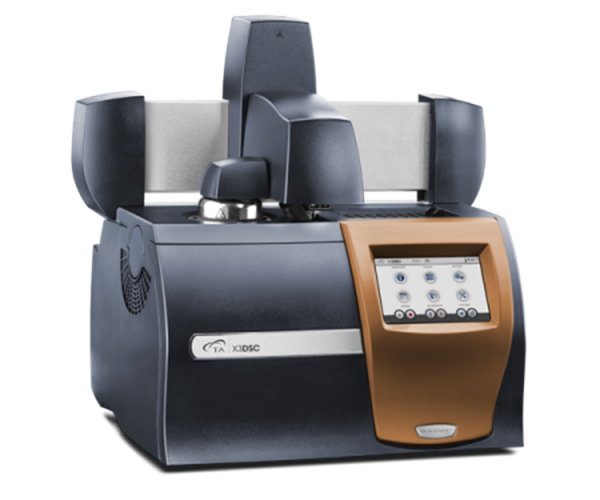
TA Instruments invites you to Discover the possibilities with the Discovery X3 Differential Scanning Calorimeter featuring a multi-sample cell that delivers high quality heat flow data for up to three samples simultaneously. The Discovery X3 DSC combines industry-leading performance with the tools to increase productivity on every level of material research. TA Instruments’ commitment to innovation enables scientists and engineers to reach their goals faster and make critical decisions with confidence.
Features and Benefits:
TA Instruments has set the bar in the science of DSC where best-in-class performance is realized without the need for pre- and post-test data manipulation prevalent in competitive offerings. The Discovery Series DSC’s provide both novice and advanced DSC users the highest confidence in generating superior data, while enhancing laboratory workflows and productivity.
Discovery Core Rheometer
Empower Every User to Perform Rheological Measurements
The Core Rheometer is the first system to combine wide-ranging measurements of viscosity and viscoelasticity with streamlined, walk-up usability. The new RheoGuide user interface enables complete operation directly from the touch screen, with direction, illustration and validation at every step.
The new TA Instruments | Waters Discovery™ Core Rheometer empowers every user to perform rheological measurements, guiding formulation development, optimizing performance and ensuring product quality. Whether you are new to rheology, upgrading your quality control testing, or expanding capabilities to meet growing demands, the Core Rheometer empowers your lab to discover insights into your materials’ behavior needed to advance your goals.
Discover Insights Beyond Viscosity
While viscometers report only a single viscosity value within a limited range, the Core Rheometer captures the complete viscosity profile, representing material behavior across all relevant conditions. Complex fluids like suspensions, emulsions, gels, pastes and slurries are non-Newtonian. Their viscosity changes with the applied shear rate and time; it is not a single value. Characterizing the full range of viscosity is critical to understand flow behavior under real-world conditions.
Rheometer Advantages:
Test Modes: