

Making a Battery: How to Choose the Right Materials
A key aspect of selecting the best materials for each part of the battery to optimize the six primary performance characteristics depends on advanced analytical characterization. One of the most critical parameters in material selection is thermal tolerance because the materials comprising a working battery must work within a temperature range of -20 °C to 60 °C. The analytical technique known as thermal analysis is ideal for testing thermal tolerances and stability of battery materials. With thermal analysis, it’s possible to obtain such thermal parameters as the decomposition temperature, chemical composition, degree of oxidation, solvent composition, melting temperature, glass transition, and thermal stability.
Battery Components
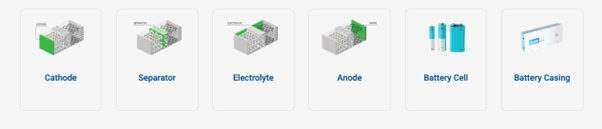
When thermal analysis is combined with mechanical testing, it’s possible to understand dimensional stability of a polymer’s length and shape, e.g., the polymer separator. This thermal and dimensional insight can help prevent separator failure and ensure battery safety.
Finally, when it comes to assembling the materials together during manufacturing, it often requires working with slurries of solid particles, binders, and solvents. At this stage, rheology provides critical insights into battery slurries at each manufacturing stage including storage, mixing, coating, and drying. A rheological profile measurement can help ensure a uniform, defect-free coating that leads to production of consistent, high-quality electrodes with high batch-to-batch repeatability and low scrap rates.
Whether your goal is to create a higher performing battery within a smaller footprint or develop a brand-new battery using more sustainable materials, knowing the thermal, rheological, calorimetric, and mechanical properties of the materials in your main battery components is key to your success. Waters-TA Instruments provides leading battery researchers with the advanced analytical characterization tools needed to develop higher performing and safer battery technology. Contact us today to start designing your personal workflow for success.
Lab Equipment, Integrated Weighing Solutions to Support Battery Manufacturing
Material refiners, battery manufacturers, OEMs and recyclers are all invested in meeting global carbon neutrality goals and developing the super battery. Developing safe, durable rechargeable batteries that satisfy “green” mobility initiatives requires significant investment in research and development (R&D) and quality control (QC), as well as expertise in production stages.
Sartorius provides solutions for several steps of the rechargeable battery manufacturing process - from material purity determination and in-process optimization to final release - with intuitive lab tools and integrated weighing solutions, further enhanced by multivariate data analytics.