


Malva is the Xenocs distributor for Greece and Cyprus. Explore the Xenocs instruments and software for small- and wide-angle X-ray scattering.
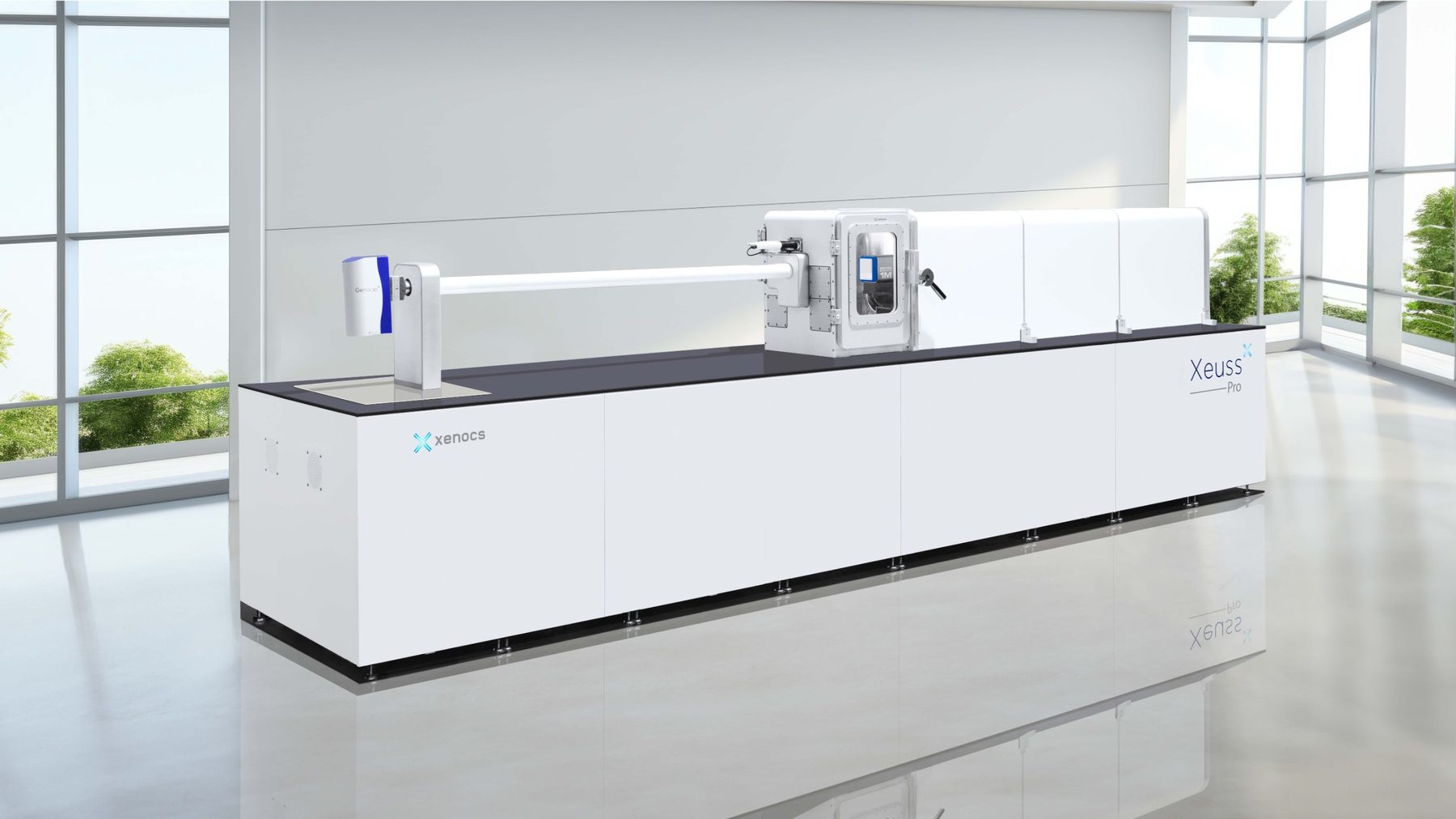
The Ultimate Solution for Nanoscale Characterization using SAXS/WAXS/GISAXS/USAXS/Imaging
Learn more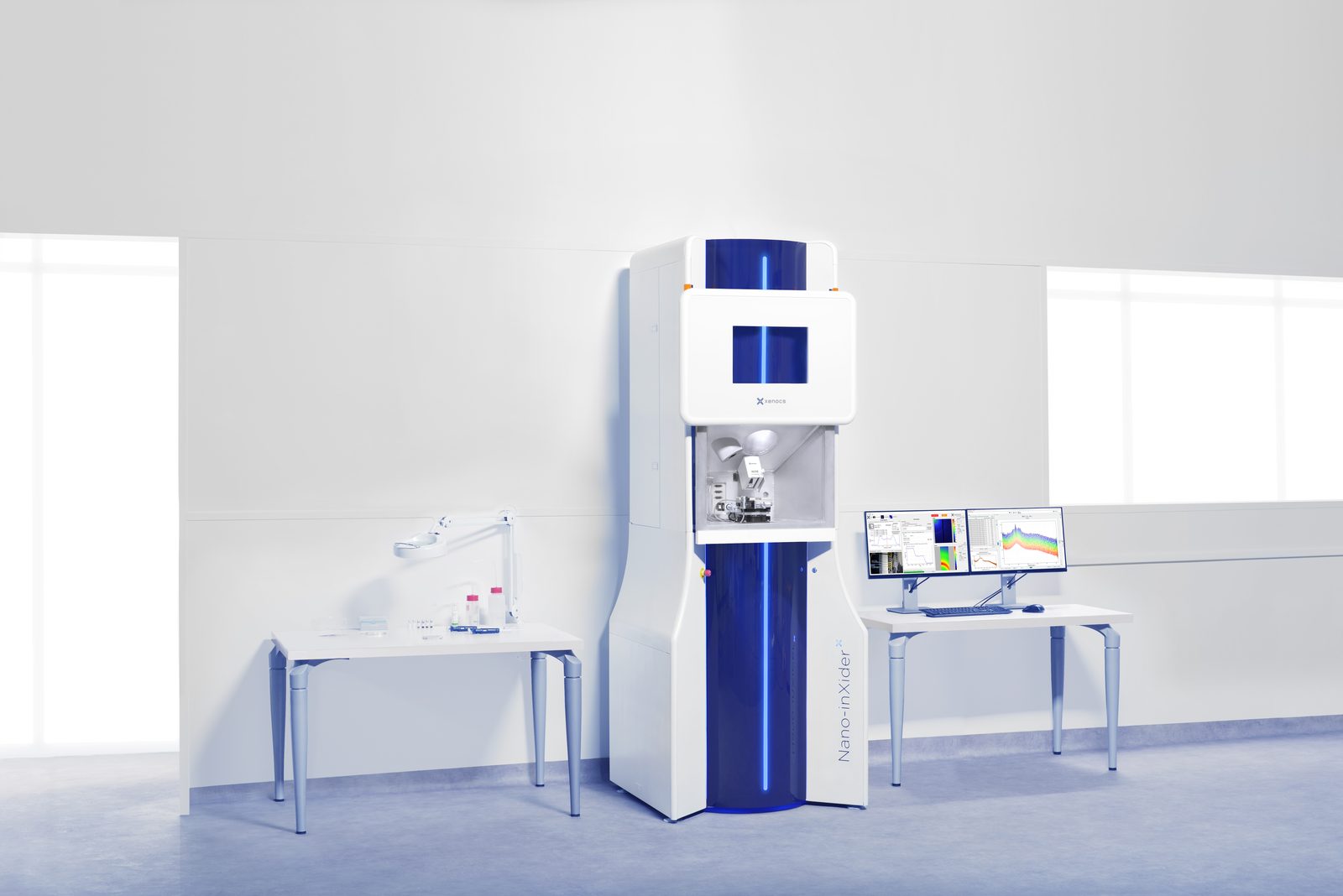
Smart nanoscale characterization with ease of use and high performance in a compact, intelligent design
Learn more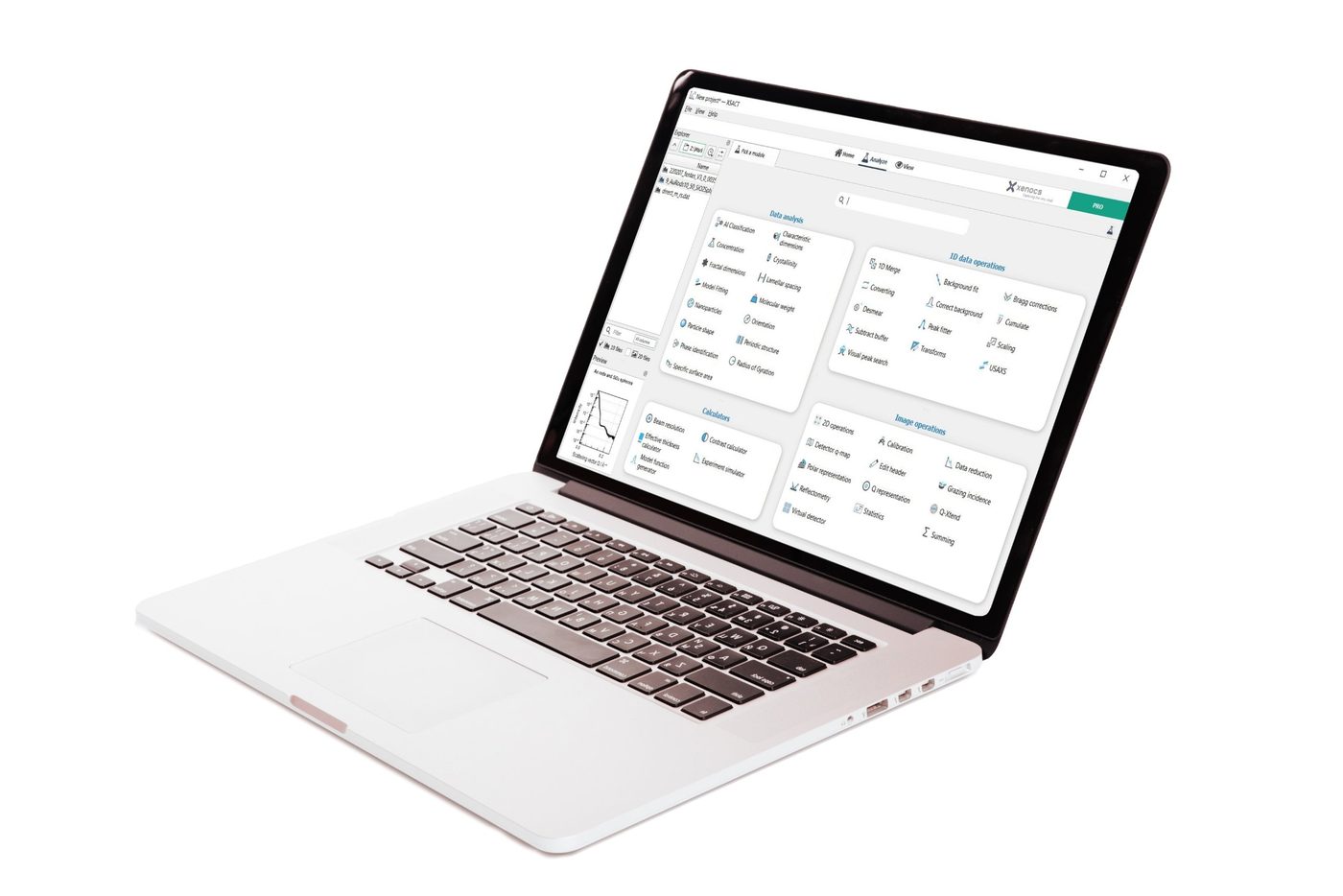
X-ray scattering data processing and analysis.
Learn moreIn biostructural research, understanding how proteins, nucleic acids, lipids, and self-assembled biomaterials behave in solution is essential. Indeed, their function depends on nanoscale properties such as shape, oligomeric state, flexibility, and supramolecular organization. Many biologically relevant systems, whether well-folded proteins, multi-domain assemblies, intrinsically disordered regions, RNA architectures, or lipid-based nanostructures, are dynamic, heterogeneous, or difficult to crystallize. Characterizing these structures under near-physiological conditions is therefore critical for applications ranging from protein formulation and drug delivery to the design of advanced biomaterials.
Small-Angle X-ray Scattering (SAXS) provides a direct window into biomolecular structure in solution, quantifying global shape, oligomeric state, flexibility, and interactions without labels, staining, or crystallization. This makes SAXS particularly powerful for studying systems that are sensitive to sample preparation or that undergo structural transitions in response to formulation, ligand binding, or environmental changes. Beyond overall structure, SAXS can detect early aggregation events, resolve self-assembled biomolecular architectures, and reveal the internal organization of lipid, micellar, or peptide-based systems that underpin modern therapeutic development and formulation research.
Xenocs solutions Xeuss Pro Nano-inXider XSACT Pro Software
Formulating effective and stable pharmaceutical products often requires carefully navigating complex molecular structures that form at the nanometric scale. Active molecules can self-assemble, crystallize, hydrate, or aggregate in ways that directly influence bioavailability, stability, and therapeutic performance. Excipients such as polymers, surfactants, lipids, and salts organize into micelles, vesicles, amorphous dispersions, or mesophases. In turn, these structures enable solubilization, encapsulation, and controlled release. These architectures evolve during processing, storage, and dissolution, making it essential to understand their structural behavior under realistic conditions.
Small-Angle and Wide-Angle X-ray Scattering (SAXS/WAXS) provide direct, non-destructive insight into these pharmaceutical structures in solid, semi-solid, or solution states. Scattering methods quantify particle size distributions, internal layering, crystallinity, and amorphous ordering. Additionally, they reveal self-assembled architectures across formulations, ranging from lipid nanoparticles and nanoemulsions to polymer-based delivery systems and solid dispersions. With in situ and time-resolved capabilities, SAXS/WAXS track how structure changes during mixing, heating, freeze–thaw cycles, dissolution, or long-term storage, supporting both early-stage development and quality control.
Xenocs solutions Nano-inXider Xeuss Pro XSACT Pro Software
Cosmetic and personal care products such as creams, lotions, shampoos, sunscreens and detergents are typically multicomponent colloidal systems. Their micelles, emulsions, lamellar phases, and gels underpin sensory quality, stability, and active delivery. Because these structures evolve during manufacturing, storage, and use, understanding nanoscale organization has become essential for developing formulations that remain stable, consistent, and effective throughout their lifecycle.
Small-Angle and Wide-Angle X-ray Scattering (SAXS/WAXS) provide direct insight into the nanoscale organization of cosmetic and consumer care formulations without disturbing their native structure. These techniques quantify how surfactants, oils, polymers, and water arrange within multiphase systems and how this internal architecture evolves in response to processing conditions or environmental stress. Scattering methods capture ordering, periodicity, aggregation, and structural transitions in situ. This reveals the mechanisms that control stability, rheology, sensory properties, and delivery performance. This structural understanding supports both formulation development and quality control, ensuring products maintain consistent behavior throughout their lifecycle.
Xenocs solutions Nano-inXider Xeuss Pro XSACT Pro Software
Polymer materials develop complex internal structures as they are synthesized, blended, stretched, cooled, or processed. Block copolymers form periodic nanodomains, while semicrystalline polymers grow lamellae within amorphous regions. At the same time, fillers distribute through the polymer matrix, tuning mechanical, optical, and barrier properties. Orientation can emerge under flow or tension, and thin films often develop gradients or ordered surface layers that differ from the bulk. These multiscale features determine how membranes separate, how packaging resists deformation, how coatings cure, and how composites perform. Therefore, to optimize these materials, researchers need tools that reveal how polymer morphology forms and evolves under realistic conditions.
Laboratory Small and Wide Angle X-ray Scattering (SAXS and WAXS) and grazing-incidence techniques allow polymer structures to be examined under the exact conditions where they form or transform. In particular, researchers can observe polymer structures in situ during crystallization, solvent evaporation, order–disorder transitions, or thermal annealing. Measurements can also be done in operando during stretching, flow, or coating, revealing how lamellae thicken and block-copolymer domains reorganize. Additionally, these techniques show how orientation develops and how additives influence chain packing. This approach captures structural evolution in bulk materials and thin films without altering the sample. Consequently, it provides a direct link between processing history, nanoscale morphology, and the resulting mechanical, optical, or barrier properties.
Xenocs solutions Xeuss Pro Nano-inXider XSACT Pro Software